
Licensed in New York & Virginia  ·  VA License # 11-30327 ✉ rlowe@culperintelligence.com☎ (540) 412-8384

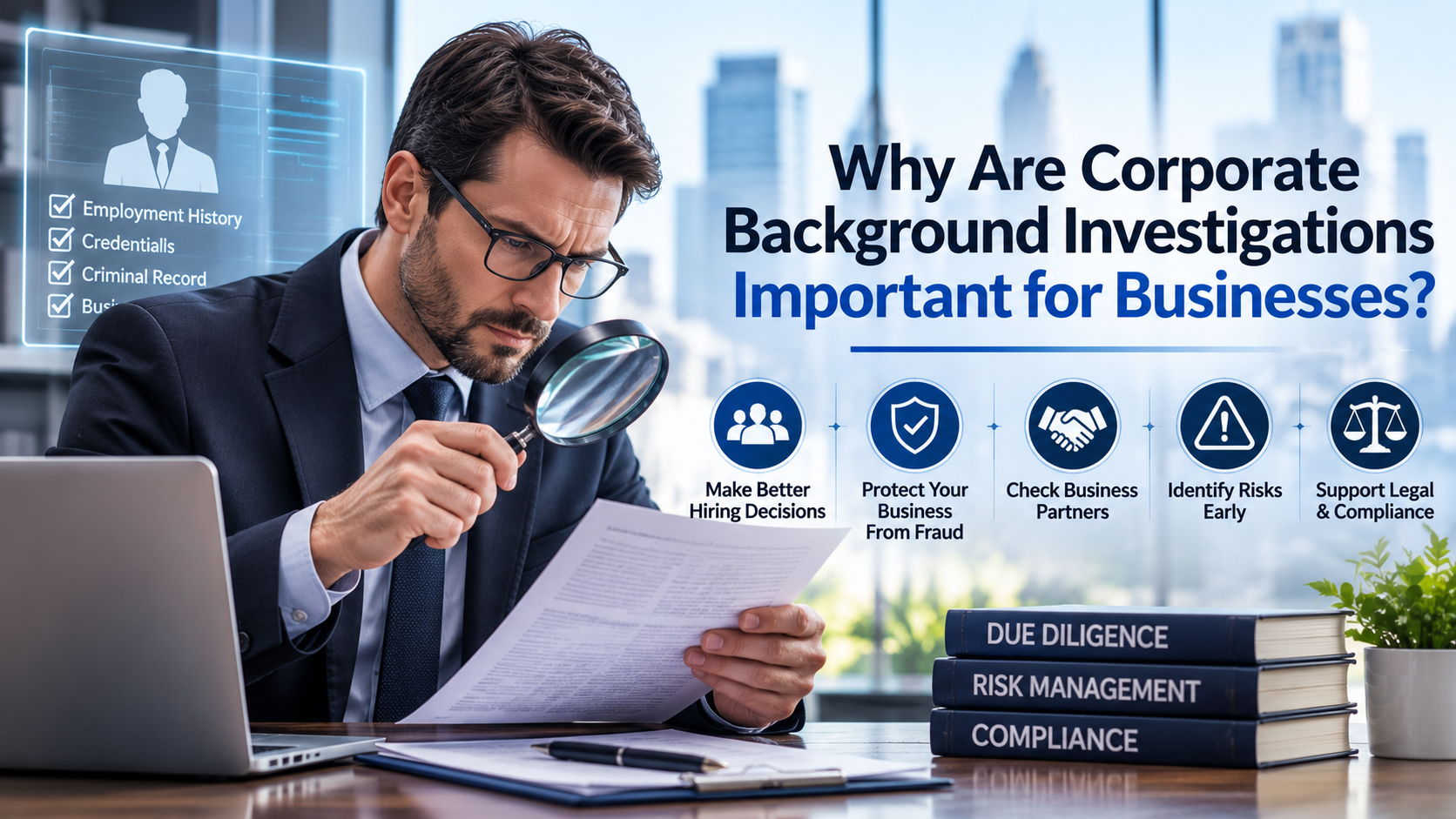
Why Are Corporate Background Investigations Important for Businesses?

Hiring a new executive, bringing on a business partner, or signing a major supplier agreement can open the door to exciting opportunities. But before you shake hands and celebrate the deal, there’s one important question: do you really know who you’re working with?

In business, a polished resume or an impressive presentation doesn’t always tell the whole story. Inaccurate credentials, undisclosed conflicts of interest, and questionable business histories can create expensive problems.

That’s why corporate background investigation services are an important part of responsible business decision-making. They help organizations verify information, identify potential warnings, and make choices based on facts rather than assumptions.

1. Make Better Hiring Decisions

A candidate might have an impressive resume, excellent references, and a confident answer to every interview question. Still, employers need to know whether the information provided accurately reflects the candidate’s background.

For positions involving financial authority, confidential information, or senior management responsibilities, proper screening can be particularly important. A corporate background investigation helps to verify relevant employment history, professional qualifications, business affiliations, and other information suitable to the role.

These checks can help employers:

  • Identify inconsistencies in application materials.
  • Verify relevant professional credentials.
  • Assess information connected to potential conflicts of interest.
  • Make more informed hiring decisions.

2. Protect Your Business From Fraud

Fraud doesn’t always begin with an obvious warning sign. Sometimes, it starts with a questionable invoice, an unexplained financial discrepancy, or a business relationship that doesn’t look quite right.

When these concerns arise, acting on assumptions can be risky. Businesses need reliable information to understand what happened and decide what to do next.

Professional corporate background investigation services can help examine relevant individuals, companies, and business relationships. Depending on the assignment, an investigation may involve reviewing available records, researching corporate affiliations, or identifying inconsistencies that warrant further attention. 

3. Check Business Partners Before Signing Agreements

Partnerships can help businesses grow, enter new markets, and develop valuable relationships. However, a promising opportunity can quickly become complicated when one party has undisclosed liabilities, questionable affiliations, or a history that deserves closer examination.

Corporate background investigations can support this process by examining relevant business records, ownership information, professional histories, and other available information connected to a proposed relationship.

This is especially useful when considering:

  • Joint ventures and strategic partnerships.
  • Major suppliers or contractors.
  • Business acquisitions and investments.
  • Relationships involving sensitive information or substantial financial commitments.

4. Identify Risks Before They Become Bigger Problems

A small concern can become a serious business issue when nobody investigates it. An undisclosed conflict of interest, for instance, may affect procurement decisions, while misleading company information may complicate an acquisition.

Early investigation allows decision-makers to examine the facts before proceeding.

A private detective in Virginia with relevant corporate investigation experience can help clients determine what information is available, identify potential inconsistencies, and document findings within the scope of an assignment.

This doesn’t mean every warning sign will reveal misconduct. Sometimes, an apparent discrepancy has a reasonable explanation. The value of an investigation lies in helping businesses distinguish between verified information, unanswered questions, and unsupported assumptions.

5. Support Legal and Compliance Decisions

Businesses operate within a framework of contractual obligations, employment requirements, privacy rules, and industry-specific regulations. Background investigations can help organizations gather information relevant to certain legal and compliance decisions.

For example, a company may need to examine a suspected conflict of interest, investigate concerns about a business transaction, or gather information before consulting legal counsel about a dispute.

Experienced investigators can help collect and organize relevant findings through appropriate research and investigative methods. Their work may support internal reviews or provide useful information for attorneys assessing a matter.

However, investigations must be conducted lawfully. Employment screening, consumer reporting, access to personal information, and other investigative activities may be subject to specific legal requirements. Businesses should ensure that the methods used are suitable for their intended purpose.

6. Choose an Investigator With Relevant Experience

Not every background check requires the same level of investigation. Confirming a professional qualification is different from examining a complex corporate relationship or investigating suspected financial misconduct.

When choosing a private detective in Virginia, businesses should look beyond a quick online search. Ask about relevant experience, licensing, investigative methods, reporting practices, and confidentiality procedures.

Culper Intelligence Group, headquartered in Spotsylvania, Virginia, provides investigative and intelligence services for corporate, legal, and personal matters. Founded by Ronald J. Lowe, a 20-year NYPD career, the firm brings law enforcement and investigative experience to its work.

Before proceeding, discuss your objectives and the information you need. A clear initial briefing helps establish the scope of the assignment, identify suitable investigative steps, and clarify expected costs.

Make Informed Decisions With Confidence

Business success depends on more than good ideas and strong relationships. It also requires knowing when to ask questions, verify information, and take a closer look at potential risks.

Professional corporate background investigation services can help businesses evaluate candidates, assess potential partners, investigate suspicious circumstances, and gather information relevant to important decisions.

When a situation requires more detailed research, an experienced private detective in Virginia can provide a structured way to examine the available facts.
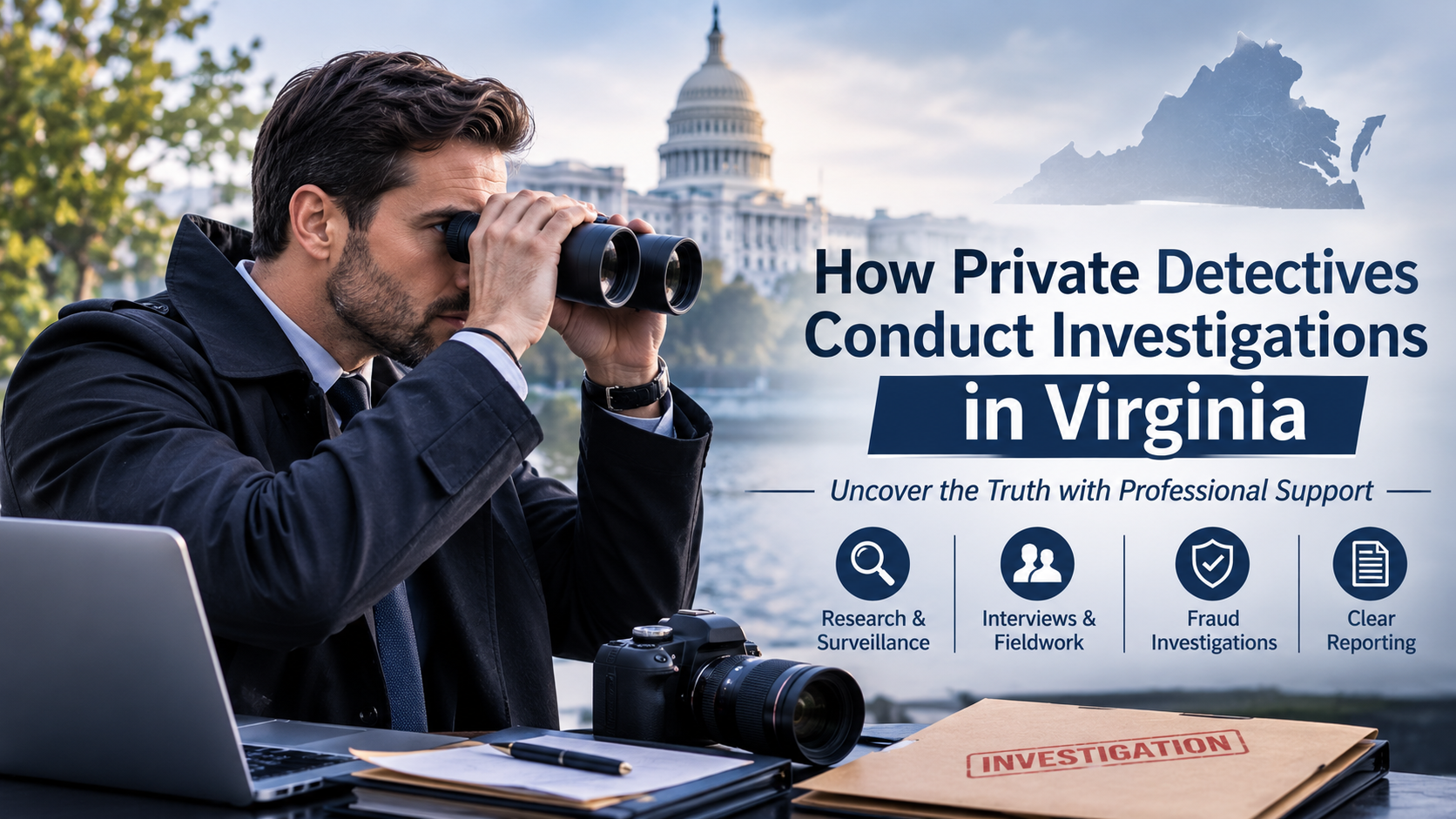
How Private Detectives Conduct Investigations in Virginia

When something does not add up, facts matter more than assumptions. Whether a business suspects misconduct, an insurance claim raises questions, or someone needs help locating a person, a professional investigation can help uncover information that might otherwise remain hidden.

A private detective Virginia uses research, interviews, observation, and evidence analysis to help clients understand a situation. The goal is to gather relevant information lawfully, verify details, and document findings clearly, not simply follow leads or make assumptions.

Understanding the Investigation

Every investigation begins with a question. A business may suspect financial misconduct, an attorney may need information for a case, or an individual may require help establishing someone’s whereabouts.

The investigator first discusses the circumstances, reviews available information, and defines the assignment’s objectives. Relevant documents, dates, names, and known details can help determine the next steps.

Clear objectives keep the investigation focused. They also help establish which methods are appropriate and what information the client needs to make informed decisions.

Step 1: Researching Records and Available Information

Investigators examine relevant sources to identify leads and establish context. Depending on the case, this may involve public records, business information, court-related records, and lawfully accessible online material.

The purpose is not to collect as much information as possible. It is to identify details that are credible, relevant, and useful.

For example, an investigator examining suspected business misconduct may compare records, verify relationships, or identify inconsistencies in a timeline. Information from one source may provide a lead, but it does not automatically establish wrongdoing. Details must be assessed in context and verified where possible.

Step 2: Conducting Interviews and Fieldwork

Documents do not always tell the whole story. Interviews can help clarify events, identify potential witnesses, and reveal details that may not appear in written records.

When appropriate and legally permitted, investigators may also conduct fieldwork or surveillance to document relevant activities. These tasks require planning, discretion, and careful recordkeeping.

Professional investigations rely on accurate observations rather than guesswork. Investigators must distinguish what they directly observe from what they infer, ensuring that findings are presented responsibly.

Step 3: Examining Suspected Business Fraud

Financial discrepancies, unexplained losses, conflicting statements, or concerns about internal misconduct can expose businesses to operational and financial risks. Business fraud investigation services help organizations examine these concerns methodically.

Depending on the assignment, an investigation may involve:

  • Reviewing relevant business records and transactions.
  • Identifying inconsistencies in accounts or statements.
  • Interviewing individuals with relevant information.
  • Examining suspected asset misappropriation or other misconduct.
  • Documenting findings for internal, legal, or insurance-related review.

A structured investigation can help clarify what happened and identify questions that require further attention. However, suspicious activity is not proof of fraud. Findings should be evaluated carefully before an organization makes significant decisions or takes legal action.

Step 4: Documenting Findings and Preparing Reports

Collecting information is only one part of an investigation. Findings must also be organized so clients can understand what the evidence establishes.

Depending on the assignment, a report may include the investigation’s scope, relevant observations, supporting documentation, and unresolved questions. Clear documentation helps clients understand how findings were reached and whether additional investigation may be necessary.

This is especially important when information may support business decisions, insurance matters, or legal proceedings. Investigators can document relevant evidence, but they cannot guarantee a particular legal outcome or that every finding will be accepted by a court.

Choosing the Right Private Detective in Virginia

Selecting an investigator involves more than finding someone willing to take the case. Clients should consider the professional’s qualifications, experience, investigative approach, and communication practices.

Before hiring a private detective in Virginia, consider these points:

  • Licensing and compliance: Check applicable licensing requirements and authorization for the proposed work.
  • Relevant experience: Look for experience with the type of investigation you need.
  • Confidentiality: Discuss how sensitive information will be handled.
  • Clear expectations: Understand the assignment’s scope, fees, and reporting arrangements.
  • Evidence-focused methods: Choose a professional who prioritizes accurate documentation over promises of guaranteed results.

Culper Intelligence Group provides investigative and intelligence services for individuals, businesses, insurance matters, and legal support. Discussing your concerns and objectives can determine which investigative approach is suitable for your situation.

Turning Questions Into Clearer Facts

When important questions remain unanswered, a structured investigation can help replace uncertainty with documented information. From preliminary research and interviews to business fraud inquiries and final reporting, private detectives work to establish what the available evidence supports.

The importance of a professional investigation lies in its careful, discreet, and methodical approach. With a clear objective and a qualified investigator, individuals and organizations can gain useful information to guide their next steps.

Frequently Asked Questions

  1. When should I hire a private detective in Virginia?

Consider hiring an investigator when you need independent fact-finding for a business concern, insurance matter, missing-person inquiry, background research, or legal case. The right service depends on the circumstances and information required.

  1. What do business fraud investigation services involve?

They may include reviewing business records, examining inconsistencies, conducting interviews, investigating suspected misconduct, and documenting findings. The specific methods depend on the assignment and available information.

  1. Can a private detective guarantee that evidence will be accepted in court?

No. Evidence admissibility depends on the information, how it was obtained, and applicable legal rules. An attorney can explain how investigative findings may be used in a particular case.

↑